Ask any D2C support team what message they see most, and the answer is almost always the same: "Where is my order?"
Support teams call it WISMO (Where Is My Order). It's often the single most common question a brand gets (Gorgias puts it at about 18% of all incoming support requests), and every one of them takes a person a minute or two: find the order, open the courier site, copy the status, reply. Multiply by a few hundred a day during a sale.
The good news: WISMO is the easiest question to automate well, because the answer already exists in your store and your courier's system. This guide shows how.
In this guide:
- Why shoppers ask (even when you sent a tracking link)
- Step one: reduce the questions
- Step two: answer the rest instantly
- When to hand over to a person
- What to measure
- FAQ
1. Why shoppers ask (even when you sent a tracking link)
- The tracking link is buried in an email they didn't open.
- The courier page is confusing: "In transit — hub" doesn't mean much.
- It's late, or the expected date changed and nobody told them.
- They paid COD and want to know when to keep cash ready.
- They want to change something: address, phone number, delivery date.
Most of these are really about reassurance. A clear, fast answer on the channel they already use stops the follow-up messages.
2. Step one: reduce the questions
Send updates on WhatsApp before the shopper has to ask. The useful ones:
| Update | When | Message type |
|---|---|---|
| Order confirmed | Right after purchase | Utility template |
| Shipped | When the courier picks it up, with tracking link | Utility template |
| Out for delivery | Morning of delivery | Utility template |
| Delayed | As soon as you know | Utility template |
| Delivered | After delivery, with a "reply if anything's wrong" | Utility template |
These are utility templates on the WhatsApp Business Platform: they need Meta's approval and the customer's opt-in, and they cost much less than marketing messages: about ₹0.115 each in India, against ₹0.86 for marketing (from October 2026).
The delay message matters most. A shopper told before the expected date is far calmer than one who has to chase you after it.
3. Step two: answer the rest instantly
Some shoppers will still ask. When they do, an AI agent connected to your store and courier can:
- Recognise the shopper from their WhatsApp number (or ask for an order number).
- Look up the real order in your store.
- Get the latest tracking status from the courier.
- Reply in plain words: "Your order #1042 left the Delhi hub this morning and should reach you Thursday. Here's the live tracking link."
- Answer the follow-up: "Can I change the address?", "Is COD okay?", "Can I add another item?"
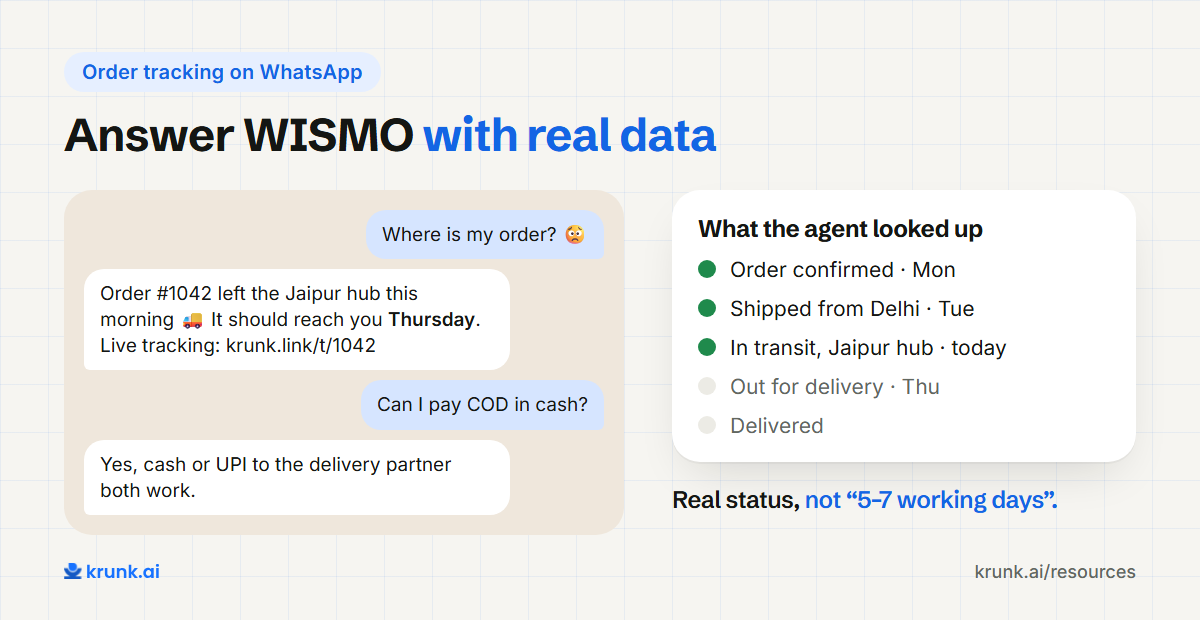
The key is real data. An FAQ bot that replies "Orders usually take 5–7 days" doesn't answer the question; it just delays the angry second message.
And because the shopper is already chatting, the same conversation can sell. "While you wait, the matching dupatta is back in stock." Use this sparingly and only when the order is on track.
4. When to hand over to a person
Automate the answer, not the problem. Hand the chat to your team when:
- the order is lost, damaged or wrong;
- it's well past the promised date;
- the shopper is upset or has asked more than once;
- they want a refund or cancellation that needs approval;
- the courier data is missing or contradictory.
The handover should carry the full chat and the order details, so your team can act immediately instead of asking again.
5. What to measure
- WISMO volume: order-status questions per 100 orders. Proactive updates should push it down.
- Resolved without a human: share of WISMO chats the agent closes on its own.
- First reply time for order questions.
- Repeat contacts: shoppers asking about the same order twice.
- COD refusals / RTO rate, which often fall when buyers are kept informed.
Where Krunk fits
Krunk syncs with your Shopify orders, answers "where is my order?" on WhatsApp, Instagram and your website with the real status, and hands problem orders to your team with everything attached.
Next step
See the WhatsApp AI agent →FAQ
What does WISMO mean?
"Where Is My Order": the support term for order-status questions, usually the most common type of message an online store gets.
How do I reduce WISMO questions?
Send proactive updates on the channel shoppers use (WhatsApp in India): confirmed, shipped, out for delivery, delayed. Then let an agent answer the remaining questions instantly.
Can I send order updates on WhatsApp for free?
No. Business-started messages use templates that Meta charges for, though utility templates (about ₹0.115 each in India) cost far less than marketing ones (about ₹0.86).
Does order tracking on WhatsApp work with Shopify?
Yes. Tools connected to Shopify can read order and fulfilment status and send updates or answer questions on WhatsApp.
Should the AI handle cancellations and refunds?
It can explain the policy and collect details, but decisions on money are best confirmed by your team.